The Role of Music in Early Childhood Development
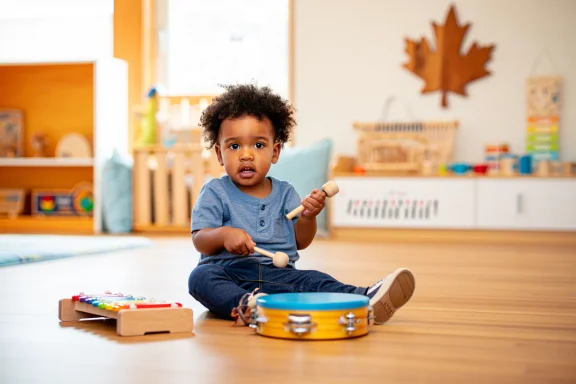
Picture this: it’s a snowy Saturday morning in Winnipeg, and your two-year-old is banging away on a toy xylophone while humming along to CBC Kids. What you might think is just adorable chaos is actually your little one’s brain firing on all cylinders, building connections that’ll benefit them for life.
From coast to coast to coast, Canadian parents are discovering what researchers have known for decades: music isn’t just entertainment for kids—it’s brain food. Whether you’re in downtown Toronto or rural Saskatchewan, introducing musical instruments and activities to your children can dramatically impact their cognitive development, language skills, and emotional intelligence.
Why Music Matters More Than You Think
According to recent studies from Canadian universities, including research from the University of Toronto’s Faculty of Music, children who engage with music before age five show significant improvements in brain development compared to their non-musical peers.
The magic happens in the brain’s neural pathways. When little hands pluck guitar strings or tiny voices sing nursery rhymes, multiple brain regions light up simultaneously—areas responsible for language, memory, spatial reasoning, and emotional processing all work together like a perfectly tuned orchestra.
Dr. Sarah Chen, a developmental psychologist at the University of British Columbia, explains: “Music creates a unique neurological experience. It’s like giving the brain a full-body workout while having fun.”
Brain Development: Building Tomorrow’s Thinkers
Enhanced Neural Connections
Musical activities create what neuroscientists call “cross-modal plasticity”—fancy words for your child’s brain building superhighways between different thinking areas. When your preschooler shakes maracas to the rhythm of a song, they’re simultaneously:
- Processing auditory information
- Developing motor coordination
- Understanding patterns and sequences
- Building memory pathways
Improved Executive Function
Executive function skills—planning, problem-solving, and self-control—get a serious boost from musical training. A longitudinal study following Canadian children from Vancouver to Halifax found that kids with regular musical exposure scored 20% higher on executive function tests by kindergarten.
Think of it this way: learning to play “Twinkle, Twinkle, Little Star” on a recorder teaches patience, sequence recognition, and delayed gratification—skills that’ll help them tackle everything from math homework to teenage peer pressure down the road.
Language Skills: From Babble to Brilliance
Phonological Awareness
Music and language share more DNA than you might expect. Both involve rhythm, pitch, and timing—the building blocks of communication. Canadian speech-language pathologists consistently report that children with musical backgrounds develop stronger:
- Sound discrimination: Recognizing subtle differences between similar sounds
- Phonemic awareness: Understanding that words are made up of individual sounds
- Vocabulary expansion: Musical children often have larger vocabularies by age four
Bilingual Benefits
For Canadian families raising bilingual children (a reality for many of us, eh?), music provides an incredible bridge between languages. French immersion programs across Canada increasingly incorporate musical elements because rhythm helps children internalize pronunciation patterns in both official languages.
Early Reading Success
Statistics Canada data shows that children who participate in structured musical activities before age five are 23% more likely to meet grade-level reading benchmarks by grade three. The connection? Music teaches pattern recognition—the same skill needed to decode written words.
Emotional Expression: Building EQ Through Melody
Safe Emotional Outlet
Canadian winters can be long, and little ones often struggle to express big feelings when they’re cooped up indoors. Music provides a healthy outlet for emotions that three-year-olds might not have words for yet.
Whether it’s banging drums when frustrated or singing softly when sad, musical expression helps children:
- Identify their emotions
- Develop healthy coping mechanisms
- Build emotional vocabulary
- Practice self-regulation
Social Connection
Music is inherently social. From family sing-alongs during Prairie thunderstorms to community music programs at local recreation centres, musical activities teach children how to:
- Take turns (waiting for your verse in “Old MacDonald”)
- Collaborate (playing in rhythm with others)
- Show empathy (responding to mood changes in music)
- Build confidence (performing for family members)
Practical Ways to Incorporate Music at Home
Start Simple, Start Now
You don’t need a conservatory-level setup to reap music’s benefits. Here’s how Canadian parents can easily weave musical experiences into daily life:
For Babies (0-12 months):
- Sing during diaper changes and feeding time
- Play soft classical music during nap time
- Use musical mobiles (like those beautiful options from Canadian retailers)
- Introduce simple rhythm with gentle clapping
For Toddlers (1-3 years):
- Invest in age-appropriate instruments: maracas, tambourines, or wooden xylophones
- Create themed playlists for different activities (cleanup songs, bedtime lullabies)
- Dance together to CBC Music’s family-friendly programming
- Make homemade instruments using household items
For Preschoolers (3-5 years):
- Explore community music programs through local recreation departments
- Introduce simple keyboard or ukulele lessons
- Create family band performances
- Attend live children’s concerts (many Canadian cities offer free outdoor summer concerts)
Quality Over Quantity
Remember, it’s not about creating the next Céline Dion or Neil Young (though wouldn’t that be something?). Fifteen minutes of engaged musical play beats hours of background music. Focus on interactive experiences where your child is actively participating, not just passively listening.
Seasonal Musical Activities
Take advantage of Canada’s distinct seasons to keep musical exploration fresh:
- Winter: Indoor drum circles, holiday carol creation, ice instrument experiments
- Spring: Nature sound collections, rain stick making, bird song imitation
- Summer: Outdoor concerts, camping songs, beach rhythm games
- Fall: Harvest songs, Halloween sound effects creation, back-to-school musical routines
Choosing the Right Instruments
Age-Appropriate Options
Not all instruments are created equal when it comes to little hands and developing motor skills. Here’s what works best for different ages:
Under 2 years:
- Soft fabric instruments
- Large, easy-grip shakers
- Musical toys with multiple textures
Ages 2-4:
- Child-sized keyboards with sturdy keys
- Wooden rhythm instruments
- Simple wind instruments like whistles or harmonicas
Ages 4-6:
- Ukuleles (perfect size for small hands)
- Basic percussion sets
- Simple recorders or flutes
Safety First
Always prioritize safety when selecting instruments for young children. Look for:
- Non-toxic materials and finishes
- No small parts that could pose choking hazards
- Sturdy construction that can withstand enthusiastic play
- Age-appropriate volume levels (protect those developing ears!)
Supporting Your Musical Journey
Community Resources
Canada offers incredible musical resources for families. Check out:
- Local libraries: Many offer free musical storytimes and instrument lending programs
- Community centres: Affordable parent-child music classes
- Music schools: Trial lessons and group classes for young children
- Cultural centres: Exposure to diverse musical traditions reflecting Canada’s multicultural heritage
Professional Guidance
While home musical exploration is wonderful, consider professional instruction when your child shows sustained interest (usually around age 4-5). Look for instructors who specialize in early childhood music education and understand developmentally appropriate teaching methods.
The Long-Term Investment
The benefits of early musical exposure extend far beyond childhood. Canadian students who participated in musical activities before age five consistently show:
- Higher academic achievement across all subjects
- Better social skills and peer relationships
- Increased confidence and self-esteem
- Enhanced creativity and problem-solving abilities
- Stronger cultural connections and appreciation for the arts
Your Next Steps
Ready to turn your home into a musical haven? Start small and follow your child’s lead. Whether they’re drawn to rhythmic drumming or melodic humming, there’s no wrong way to begin this incredible journey.
Remember: every Canadian child deserves the gift of music. It doesn’t matter if you can’t carry a tune in a bucket or if your idea of rhythm is tapping along to Hockey Night in Canada’s theme song. What matters is creating joyful, pressure-free musical experiences that let your little one’s natural curiosity shine.
The investment you make in your child’s musical development today will pay dividends for decades to come. So grab that tambourine, crank up the kiddie tunes, and watch as your child’s brain builds the neural pathways that’ll serve them well through school, career, and life.
Music truly is the universal language—and it’s never too early to help your child become fluent.