Teaching Independence Through Montessori Principles at Home
Introduction: Why Independence Matters More Than Ever for Canadian Kids
Picture this: your four-year-old confidently preparing their own snack while you tackle that stack of emails from work. Sound too good to be true? Welcome to the world of Montessori parenting, where kids as young as two can master surprising levels of independence.
Dr. Maria Montessori’s century-old philosophy isn’t just classroom theory – it’s a practical approach that Canadian families from Vancouver Island to the Maritimes are using to raise confident, capable children. With our long winters keeping families indoors and busy schedules pulling parents in multiple directions, teaching kids independence isn’t just helpful – it’s essential.
Recent Statistics Canada data shows Canadian parents spend an average of 5.2 hours daily on childcare activities. Imagine reclaiming even 30 minutes of that time while simultaneously building your child’s confidence and life skills.
Understanding Montessori Independence: More Than Just Chores
The Canadian Context
Montessori independence goes beyond getting kids to clean their rooms (though that’s a nice bonus). It’s about creating an environment where children naturally develop problem-solving skills, self-confidence, and intrinsic motivation – qualities that serve them well in our increasingly competitive Canadian education system.
The core principle? “Help me do it myself.” Instead of doing everything for our children, we guide them toward mastery of age-appropriate tasks.
Key Montessori Principles for Home
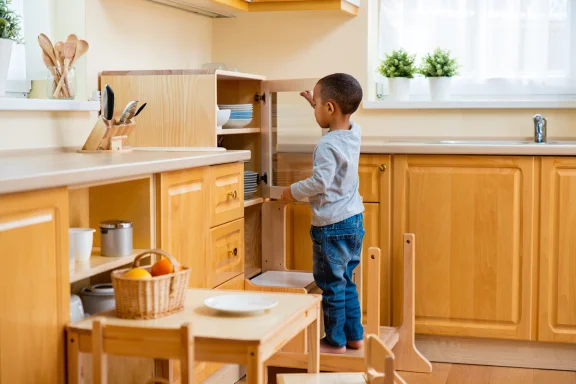
Prepared Environment: Everything has a place, and everything is accessible to your child. Think low shelves, child-sized furniture, and tools that actually work (not toy versions).
Freedom Within Limits: Clear boundaries with choices inside those boundaries. Your three-year-old can choose between oatmeal or toast for breakfast, but breakfast is non-negotiable.
Following the Child: Observe what naturally interests your child and build learning opportunities around those interests.
Practical Montessori Applications in Daily Canadian Life
H2: Kitchen Independence: From Poutine to Pancakes
The kitchen is independence central in Montessori homes. Here’s how Canadian families are making it work:
Meal Preparation Tasks by Age:
Ages 2-3:
- Washing vegetables in a small basin
- Tearing lettuce for salad
- Spreading butter on bread
- Pouring milk from a small pitcher
Ages 4-5:
- Using a child-safe knife to cut soft fruits
- Cracking eggs (expect some shells!)
- Measuring ingredients with supervision
- Operating a small hand-crank can opener
Ages 6+:
- Planning simple meals
- Following picture recipes independently
- Using small kitchen appliances safely
- Preparing their own school lunches
Real Canadian Example: The Johnson family in Calgary created a “snack station” with a mini-fridge at toddler height stocked with pre-washed fruit, cheese strings, and water bottles. Their three-year-old now independently handles afternoon hunger without constant parental intervention.
H2: Self-Care Mastery: Building Confidence One Task at a Time
Teaching self-care isn’t about rushing childhood – it’s about respecting your child’s natural desire for independence.
Bathroom Independence:
- Install hooks and shelves at child height
- Provide a sturdy step stool (not a wobbly one – safety first!)
- Keep supplies accessible: toothbrush, gentle toothpaste, washcloths
- Create visual routines with pictures showing each step
Dressing Success:
- Organize clothes in low drawers or open shelves
- Choose Canadian weather-appropriate items (layers are your friend)
- Practice with easier items first: slip-on shoes before laces, pullover sweaters before button-ups
- Lay out clothes the night before to reduce morning rush stress
Seasonal Considerations: Canadian kids need extra practice with winter gear. Start teaching zipper skills in September, practice mittens and boots indoors, and create a mudroom system that kids can manage independently.
H2: Household Contributions: Every Family Member Helps
Montessori views children as capable contributors, not just recipients of care. Age-appropriate household tasks build competence and family connection.
Cleaning and Organization:
- Provide real tools that work: child-sized brooms, spray bottles with water, microfibre cloths
- Create specific responsibilities: “You’re in charge of keeping the shoes organized”
- Make it routine, not punishment: cleaning happens daily, just like eating
Seasonal Tasks:
- Fall: Raking leaves into piles, sorting recycling
- Winter: Wiping down boots, organizing winter gear
- Spring: Planting seeds, washing windows
- Summer: Watering plants, organizing outdoor toys
Creating Your Montessori-Inspired Home Environment
H2: Space Planning That Works for Canadian Families
Living Areas: Most Canadian homes aren’t mansion-sized, but you can still create independence-friendly spaces:
- Use vertical space with low, accessible shelving
- Rotate toys seasonally (store summer items during our long winters)
- Create defined areas: reading corner, art space, building zone
- Invest in quality, child-sized furniture that grows with your child
Storage Solutions:
- Open baskets instead of toy boxes (kids can see what’s available)
- Picture labels for non-readers
- Easy-to-manage containers (no wrestling with tight lids)
- Regular decluttering – less stuff means more independence
H2: Overcoming Common Canadian Challenges
Challenge 1: Long Winters and Limited Outdoor Time
- Create indoor movement opportunities
- Rotate activities to prevent cabin fever
- Embrace hygge-style cozy independent activities
- Plan special winter independence projects
Challenge 2: Busy Family Schedules
- Start small – one new independence skill at a time
- Build routines gradually over weeks, not days
- Accept that teaching independence initially takes longer than doing it yourself
- Focus on weekend implementation before adding weekday expectations
Challenge 3: Safety Concerns
- Canadian parents often worry about safety, especially with kitchen activities
- Start with observation – let your child watch first
- Use high-quality, age-appropriate tools
- Teach proper techniques step-by-step
- Remember: minor mistakes are learning opportunities
Getting Started: Your 30-Day Montessori Independence Plan
Week 1: Observe your child’s current interests and create one independence opportunity in that area.
Week 2: Add a simple self-care routine your child can master.
Week 3: Introduce one household contribution that matches your child’s abilities.
Week 4: Evaluate what’s working and gradually expand successful areas.
Conclusion: Building Tomorrow’s Capable Canadians
Teaching independence through Montessori principles isn’t about creating little adults – it’s about respecting your child’s natural development and supporting their growing capabilities. Canadian families who embrace these methods report more confident children, smoother daily routines, and stronger family connections.
Remember, independence isn’t achieved overnight. Like learning to skate or ride a bike, it takes practice, patience, and the occasional tumble. But the payoff – children who believe in their own abilities and contribute meaningfully to family life – is worth every small step along the way.
Start where you are, use what you have, and trust your child’s natural drive toward independence. Before you know it, you’ll have a capable, confident young Canadian on your hands.
Ready to begin your family’s independence journey? Choose one small area to start this week – whether it’s letting your toddler pour their own milk or having your preschooler organize their art supplies. Independence builds one small success at a time.