Building Confidence Through Yoga and Mindfulness for Young Athletes
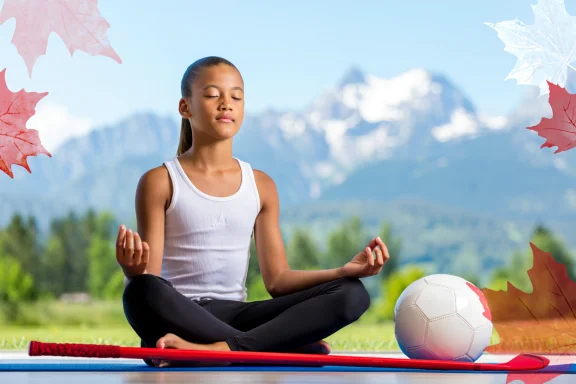
Picture this: It’s game seven of the playoffs, the arena’s packed, and your young hockey player is about to take the shot that could change everything. Their heart’s pounding faster than a Zamboni at intermission, but instead of crumbling under pressure, they take a deep breath, center themselves, and nail it. That’s the power of mental training through yoga and mindfulness – and it’s transforming youth sports across Canada.
The Mental Game Crisis in Canadian Youth Sports
Let’s be real, eh – we’ve got a problem. According to Sport Canada’s latest research, nearly 40% of young athletes report performance anxiety that affects their game. From minor hockey in Medicine Hat to swimming clubs in Halifax, coaches are seeing talented kids crack under pressure when it matters most.
The traditional approach of “just push through it” isn’t cutting it anymore. Today’s young athletes face unique pressures – social media scrutiny, intense competition for scholarships, and the weight of family expectations. It’s no wonder burnout rates in youth sports have skyrocketed from coast to coast to coast.
But here’s the good news: Canadian sports psychologists and progressive coaches are discovering that ancient practices like yoga and mindfulness aren’t just for meditation retreats in the Rockies – they’re game-changers for athletic performance.
Why Yoga and Mindfulness Work for Young Athletes
Think of mindfulness as your mental hockey helmet – it protects your brain from getting rattled by distractions and negative thoughts. When young athletes learn these techniques, they develop what researchers call “psychological flexibility” – the ability to stay focused and confident even when things don’t go according to plan.
Here’s what happens in their developing brains:
- Improved emotional regulation – They learn to manage pre-game jitters and mid-game frustrations
- Enhanced focus – Distractions bounce off them like a puck off good padding
- Better body awareness – They understand their physical sensations and can adjust accordingly
- Increased self-compassion – Mistakes become learning opportunities, not confidence destroyers
Dr. Sarah Mitchell from the University of British Columbia’s sports psychology program has been studying this for over a decade. Her research shows that young athletes who practice mindfulness techniques show a 35% improvement in performance consistency and report feeling 50% more confident during competition.
Practical Yoga Techniques for Young Canadian Athletes
Morning Activation Sequence (5-10 minutes)
Start each training day with this simple routine that works whether you’re in a Winnipeg community centre or training outdoors in Vancouver:
Sun Salutation Variation:
- Stand tall with feet hip-width apart
- Reach arms overhead – imagine you’re trying to touch the CN Tower
- Forward fold – let gravity do the work
- Half lift – hands to shins, flat back
- Step back to plank – strong as a Canadian Shield
- Lower down slowly
- Cobra pose – chest proud like singing O Canada
- Return to standing
This sequence activates major muscle groups while connecting breath to movement – crucial for athletes who need that mind-body connection during competition.
Pre-Competition Breathing (2-3 minutes)
This technique works in any arena, from the Saddledome to the Bell Centre:
4-7-8 Breathing Pattern:
- Inhale for 4 counts through the nose
- Hold for 7 counts
- Exhale for 8 counts through the mouth
- Repeat 3-4 cycles
Young figure skaters in Ontario have reported this technique helps them nail those triple jumps by calming pre-performance nerves.
Mindfulness Strategies That Actually Work
The “Maple Leaf” Focus Technique
When distractions start piling up like snow in February, teach young athletes this visualization:
- Close their eyes and imagine a single maple leaf floating gently down
- Follow its path with their mind’s eye
- When other thoughts intrude (crowd noise, opponent trash talk), gently return focus to the leaf
- Practice this for 60 seconds before each play or routine
Body Scan for Recovery
After intense training or competition, this helps young bodies and minds reset:
- Start at the toes, mentally “checking in” with each body part
- Notice areas of tension without judgment
- Breathe into tight spots
- Work systematically up to the head
- End with three deep breaths
This technique is particularly valuable for young athletes dealing with the physical demands of Canadian winter sports.
Real Success Stories from Across Canada
Case Study: The Kamloops Swim Club After implementing a 15-minute mindfulness program before practice, the club saw a 28% reduction in anxiety-related performance issues. Coach Maria Santos notes: “Our swimmers aren’t just faster – they’re happier and more resilient.”
Hockey Success in Thunder Bay The Thunder Bay Kings minor hockey program integrated yoga warm-ups and mindfulness cool-downs. Result? A 40% decrease in penalty minutes and significantly improved team cohesion. “The kids are learning to think before they react,” says head coach Jim Thompson.
Building a Sustainable Practice
The key isn’t perfection – it’s consistency. Here’s how to make it stick:
Start Small:
- 5 minutes of breathing exercises daily
- One yoga pose held for 30 seconds
- Simple body awareness check-ins
Make it Relevant:
- Connect techniques to specific sports situations
- Use familiar Canadian references in guided imagery
- Adapt practices for different seasons and venues
Track Progress:
- Keep a simple mood/confidence journal
- Note improvements in focus during practice
- Celebrate small wins consistently
The Science Behind the Success
Canadian researchers at McGill University have documented measurable changes in young athletes who practice mindfulness:
- Cortisol (stress hormone) levels drop by 23% on average
- Heart rate variability improves, indicating better stress management
- Brain scans show increased activity in areas associated with emotional regulation
- Sleep quality improves by an average of 32%
These aren’t just feel-good statistics – they translate to real performance improvements on the ice, field, court, and pool.
Overcoming Common Obstacles
“My kid thinks yoga is boring” Frame it as mental training, like physical conditioning. Many NHL players now practice yoga – use role models they admire.
“We don’t have time” Start with micro-practices. Even 60 seconds of focused breathing before a shift can make a difference.
“It’s too ‘new age’ for our traditional sport” Emphasize the performance benefits. This is about winning through better mental preparation, not changing anyone’s worldview.
Creating Team Culture Around Mental Training
The most successful programs integrate these practices into team culture:
- Make mindfulness part of regular warm-ups
- Have team “centering” moments before big games
- Celebrate mental toughness alongside physical achievements
- Train coaches to model these techniques
The Long-Term Impact
Young athletes who learn these skills aren’t just better competitors – they’re developing life skills that’ll serve them whether they make it to the Olympics or move on to other pursuits. They’re learning to:
- Manage stress in high-pressure situations (hello, university exams)
- Bounce back from setbacks with resilience
- Maintain focus in our distraction-heavy world
- Develop self-awareness and emotional intelligence
Making It Work in Canadian Contexts
Winter Considerations:
- Indoor alternatives for outdoor mindfulness practices
- Seasonal Affective Disorder awareness and management
- Using winter imagery in visualizations (peaceful snowfall, crisp mountain air)
Cultural Sensitivity:
- Respect for Indigenous mindfulness traditions
- Bilingual resources where appropriate
- Adaptation for diverse family backgrounds and beliefs
Practical Logistics:
- Work with provincial sport organizations for resources
- Utilize community centre spaces during off-peak hours
- Connect with local yoga instructors who understand sports applications
Remember, this isn’t about replacing traditional training – it’s about giving young athletes every possible advantage. In a country where sports are woven into our cultural fabric, from Hockey Day in Canada to Terry Fox runs, we owe it to our young athletes to prepare them mentally as thoroughly as we do physically.
The bottom line? Young athletes who develop these skills aren’t just more confident competitors – they’re more resilient humans. And in a world that’s throwing curveballs faster than a Blue Jays closer, that mental strength is going to serve them well beyond their sporting careers.
Ready to help the young athlete in your life build unshakeable confidence? Start with just five minutes of mindful breathing today. Their future self – whether that’s holding up a Stanley Cup or simply navigating life’s challenges with grace – will thank you for it.